AmbitiousProcess (they/them)

  • 0 Posts
  • 484 Comments
Joined 11 months ago
cake
Cake day: June 6th, 2025

help-circle

  • They used to, and they currently do too, but the current one isn’t meant to be an alternative to the like/dislike button like this portrays.

    It’s most often in your feed, where occasionally it’ll show a video to you, then give you a tiny light blue box beneath it saying “how good of a recommendation is this” or something along those lines, then you rate it so they can both make the algorithm better overall, and fine-tune yours even if you don’t want to watch the video. (e.g. I might say “5 stars, this is a good recommendation,” but never watch it just because I don’t have the time. YouTube knows I like that topic now, just that I might not watch videos that are that long.)

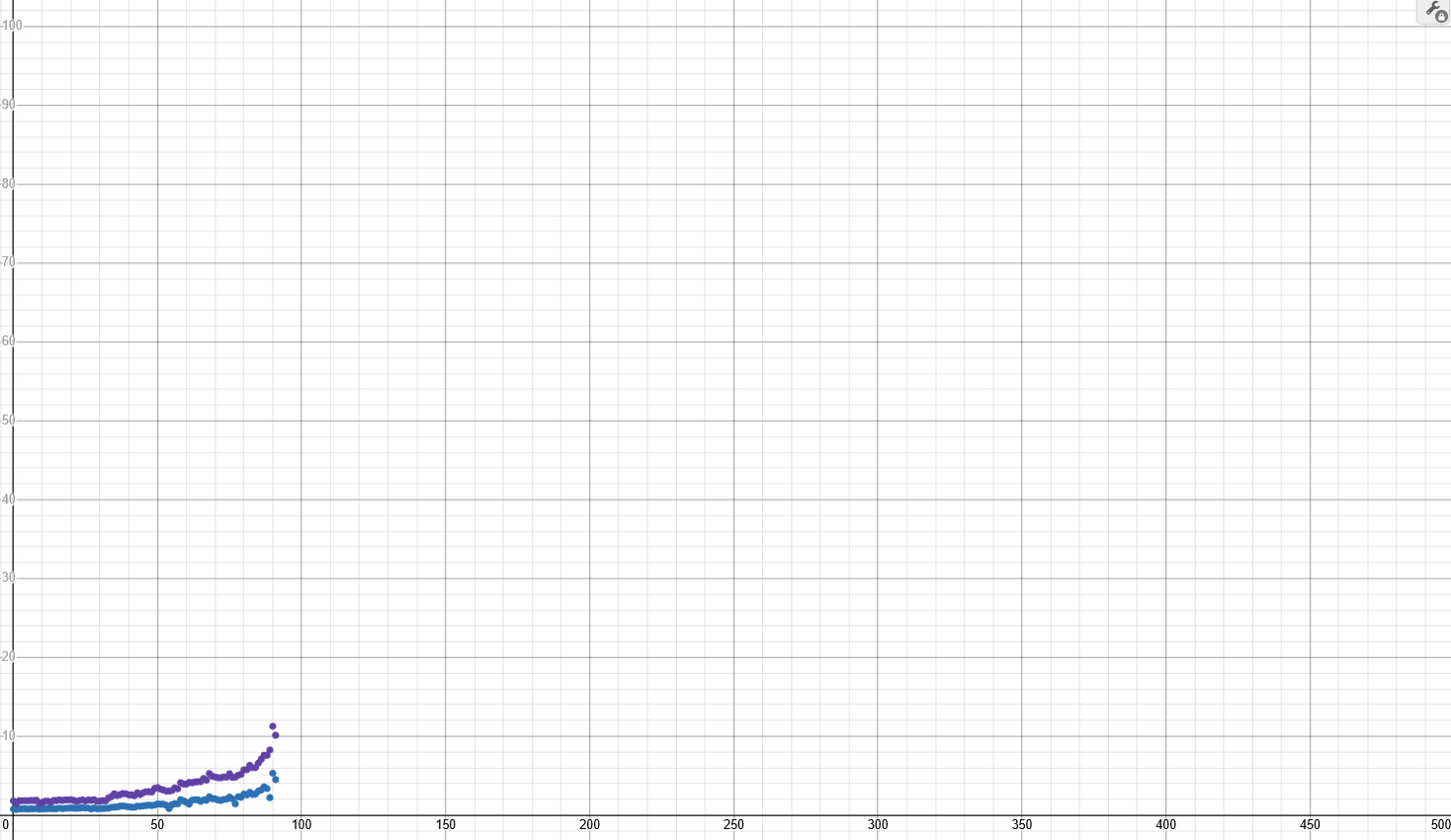

  • the usa gov graph shows a daily stat.

    The frequency of a stat doesn’t guarantee long-term assumptions. I could track linux market share every millisecond for a week, but that wouldn’t make it much more of a reliable stat than counting it daily for that week instead. The problem isn’t the frequency of the data, it’s the timeline, and the scale.

    Linux has so few users relative to the other players in the market, and the data being collected is for such a relatively short timespan where any meaningful changes to the numbers are happening, that it can’t give you a good picture.

    For example, if I start a club, and I gain an average of 10% more members every day for the first week, is it safe to assume nearly all of the people in the world will join my club because I currently have an exponential trend in my member count? Obviously not. I’m probably just pulling in people from my local community, and eventually I’ll have gotten most of the people in my area that are actually interested in joining. I have an exponential trend for now, but it’ll flatline in the next few weeks.

    if u have any other websites that show linux stats lmk

    I don’t, but the sources cited here are actually the ones I personally have already relied on for a bit now. They’re fairly accurate in their own ways. It’s reliable data, just not necessarily indicative of future trends.

    there are also reasonings listed in the dropdown at the top of the article

    They’re good reasons, but they still don’t do anything to actually validate the assumptions made in the graph. The reasoning is “Linux will probably grow because of x, y, and z… therefore this exact mathematical function is probably accurate”

    They help support the theory that Linux marketshare will grow, which I personally do believe to be true, but they do nothing to actually guarantee any numbers. They could mean a 0.1% gain in marketshare per year, a 1% compounding gain, a temporary dip because of any unforseen world events that isn’t accounted for by that function, etc.

    To bring it back to my previous analogy, it would be like if I said “all the people joining seem really invested in [club topic], are telling all their friends about it, and membership growth has been very steady, with more people joining over time through referrals from friends. This means I’ll probably see exponential growth”

    “This exact mathematical function proves I’ll have most people in the world in my club in 10 years”

    Hopefully that all makes sense? Genuinely not trying to be confrontational at all, I just want to make sure you don’t get your hopes up because the graph looks like it’ll be guaranteed and then be disappointed if it’s not 😅


  • It’s actually genuinely that simple.

    Most browsers can automatically import from most other browsers.

    For example, let’s say you install Firefox. It will give you the option to sync your bookmarks, credentials, saved autofill entries, extensions (if available on Firefox), and even your entire browsing history.

    If you switch to a chromium-based browser like Brave, it won’t even have any trouble importing extensions, since unlike Firefox, it’ll support every single chrome-supported extension by default instead of requiring a new Firefox version to also have been made by the developer.


  • (I’m citing the law, not the article)

    There’s a few things that I think help prevent something like that from happening.

    “Nudify” or “nudified” means the process by which: an image or video is altered or generated to depict an intimate part not depicted in an original unaltered image or video of an identifiable individual

    “Intimate parts” includes the primary genital area, groin, inner thigh, buttocks, or breast of a human being.

    So a reasonably sized bikini probably wouldn’t qualify, because it still covers intimate areas to some degree, but anything too skimpy would.

    The prohibitions in subdivision 2 do not apply when the website, application, software, program, or other service requires the technical skill of a user to nudify an image or video.

    So something like Photoshop wouldn’t qualify because you’d need the skills to actually edit images yourself.

    I think this:

    “No, see… My app is designed to show you what you look like in user-created outfits. Like a virtual closet mirror! What do you mean users are trying on tiny bikinis and clear cellophane dresses? How could I ever have planned for that?”

    Would be prevented by this law, but with very good reason. Anyone developing a feature like that could very well simply develop a filter that can tell if too much of a sensitive area is being exposed that wasn’t previously there. If they put technical safeguards in place, and it takes reasonably large amounts of effort for a user to bypass, then the site wouldn’t be liable because it would require “technical skill of a user”.

    A site like that can exist, and being able to digitally try on outfits is nice, but it shouldn’t be allowed to ignore the obvious consequences of not putting restrictions on how much skin can be shown.