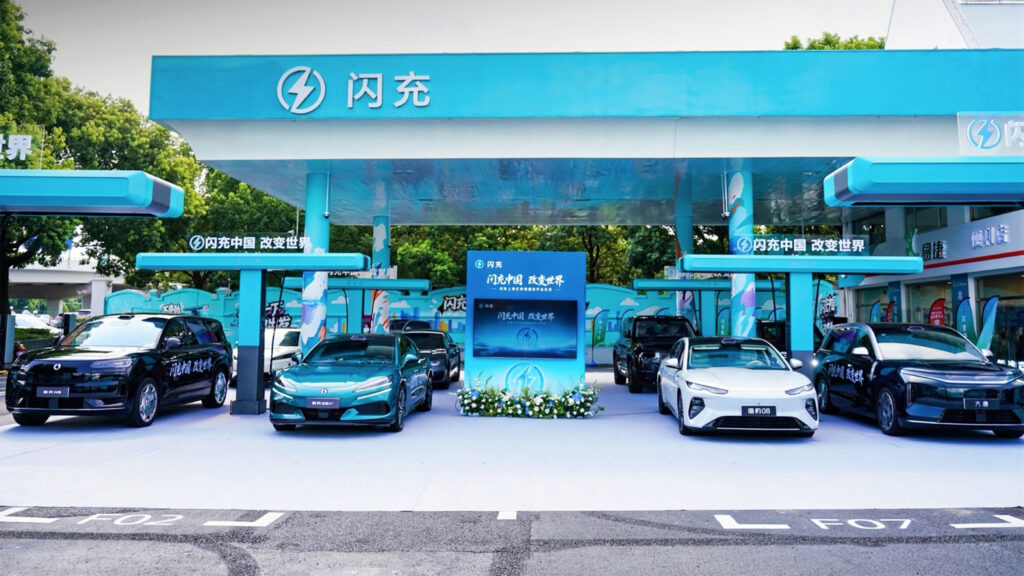
1500kW is a somewhat scary amount of power to think about. Getting close to the power usage of a train.
That’s a full charge on an Ioniq 5 in just over 3 minutes. Tho’ I’m pretty sure this only works on blade batteries, at least at that speed. Frankly I don’t mind a few minutes, 10-20 min. gives me a chance to stretch my legs and move around a bit. It’s pretty much a non-issue. Most of the time I charge ‘over night’ from my home charger. On a road trip, if I head south, or north there’s a charger near the battery limit. Nearby is a coffee shop, a thrift store, a park to run around a bit. By the time I’m done goofing off, the car charge is done.
This is the way.
Can it take it though? Are they not limited by firmware and inverter limits.
I have used 400v chargers that dont go beyond 80 on my car.
I5 has an 800v battery, and it can take up to 240 kW. I’ve never seen rates over 120kW IRL. According to this article: https://electronics.alibaba.com/buyingguides/ioniq-5-charging-speed-guide-real-world-dc-home-rates
"Approaches and Differences: DC Fast Charging vs. Level 2 Home Charging
There are only two meaningful charging approaches for the IONIQ 5—and they serve fundamentally different needs: 🔹 DC Fast Charging (10–80% Recovery)
Pros: Adds 100 miles in ~5.8 minutes 1; supports peak rates up to 235–240 kW 1; compatible with NACS and CCS networks.
Considerations: Requires specific infrastructure (not all “fast chargers” deliver >150 kW); long-term battery health benefits from varied charging patterns; fees vary widely by network.
When it’s worth caring about: You drive >300 miles/week, take multi-state trips, or lack reliable home charging.
When you don’t need to overthink it: You commute under 40 miles/day and charge overnight—DC speed has zero impact on your routine.
🔹 Level 2 Home Charging (Overnight Replenishment)
Pros: Predictable, low-cost, grid-friendly; full 84.0-kWh charge in ~7h 20m at 11.5 kW (48A circuit) 2; no subscription or app required.
Considerations: Requires 240V circuit installation (cost: $500–$1,200); slower than DC by orders of magnitude; limited by household panel capacity.
When it’s worth caring about: You own your home or have landlord approval; you want full control over timing and cost.
When you don’t need to overthink it: You rent and rely on public Level 2 (e.g., apartment complex or office chargers)—just confirm the outlet is J1772 and rated ≥32A.
" So yeah 1500kW is a tad beyond that.