

8·
15 days agoSo you have some kinda body guards on your „solo“ trip? Sounds wild
So you have some kinda body guards on your „solo“ trip? Sounds wild
I think they really did. What the fuck hahahahah.
I seriously would love to know what the thought process behind this was. Is it because the Rock has such big boobs that it would get censored by social media? Or is Disney going full puritan and now even against male nipples? Has the rock weird nipples and is ashamed?
If I understand what you’re saying correctly we are largely on the same page about this… class mobility upward is almost impossible. Classes are usually discriminatory against other classes (sometimes even towards higher classes). This makes actual class mobility very hard. People have to mask as having always belonged to a certain class by acquiring the correct signifiers.
What I am not sure I agree with, or maybe I just don’t understand it, is the point about dimensions of class. People are more than just the job they do. An aristocrat who is living off inheritance has about the same amount of actual working experience that a low class individual who can’t get a job has. They both don’t work, but since the aristocrat has a bunch of capital which the low class person doesn’t have they are on opposite ends of the spectrum.
Idk why you were getting those downvotes. I’ll check out Fussel if I get the chance.
Not saying caste system is better, both are terrible. We should strive to abolish both.
But to your point about class mobility: You can always move down in class, up is neigh impossible. Thinking that money will help you move up is only a carrot that the upper class dangles in front of the poor. Class is not only determined by wealth, it is determined by capital. Capital encompasses not only financial and economic capital, but also social capital, intellectual capital, cultural capital, etc. To move up in class you will have to acquire enough of all of these, just money isn’t enough. If you don’t have the same manners, vocabulary, friends, status symbols and don’t consume the the same media you will never be accepted and only be considered a nouveau rich and a gaudy buffoon. Your lifestyle will be better than that of the rest of your class, but the higher class will never accept you as one of their own. Your kids might be able to move up, if you put them in the right school so they can absorb some of that social capital and learn the language, acquire the correct manners and make the right friends. But you will very likely be forever stuck in the same class that you were born in, unless you move down.
There is a Philosopher called Hanno Sauer who wrote a book about this. I don’t agree with his conclusion that we cannot overcome class, but he does make some good points about its nature.

Can’t watch the video in my country but from the thumbnail it looks like „Schnuffel“, an animated bunny that was created by Jamba to sell their phone ringtones in the 2000s. Iirc this was pretty successful, to the point of landing them some hits that went platinum in the german charts.

Having a Gogol Week.
First I read his most famous play, „The Government Inspector“. It was alright, an archetypal story of mistaken identity. I liked especially that it didn’t really have any moral characters. Everybody is crooked as hell and everyone knows it and rationalises their own corruption. But overall I kinda expected more from one of Russias most famous authors.
So then I got into his Petersburg Stories (The Nevski Prospect, The Portrait, The Nose, The Overcoat and Diary of a Madman). There are five of them, and I really thought they were all great and some even brilliant. I enjoyed most „The Overcoat“ and „Diary of a Madman“. These are in many ways similar stories about Bureaucrats ignored and forgotten by society, but they develop into quite different resolutions. The others were also great to pretty good at least.
From what I hear a lot of Gogols signature style, the so called Skaz, gets lost in translation, but what remains was still pretty beautiful writing. It helps to get some background on Russian bureaucracy, names, status symbols at the time and a concept called „poshlost“ (Nabokov defines it as corny trash, vulgar clichés and bogus profundity, amongst others), as well as Skaz itself to enhance the reading, but I’m sure it’s also enjoyable to just read and see what you get from it without all that.
Next I’ll probably get to „Lost Souls“. This was supposed to be part 1 of three in his magnum opus, but in his later live he got very christian and never got around to finishing it, burning the second volume and never even starting with the third. From what I hear volume one is a closed story tho, and it might be better he didn’t finish it after getting very religious…
Anybody here read it? What was your experience with Gogol?
I know a lot of people don’t like AI and I also feel some kinda way about it, but I found it pretty helpful here. There aren’t many people who read as much or are into the kind of books that I am in my circle, so I can’t really cover this via social connections outside the internet.
How it works: write a list with all the books you read in the past, plus how you rate them. Put that into whatever AI and tell it to suggest some books with a short spoiler free paragraph on why it would be a good suggestion.
Sometimes I ask for stuff that fits with what I already read, sometimes I ask it to suggest stuff that might cover blind spots or perspectives that I haven’t covered yet. So far I’ve enjoyed most suggestions and found some books I wouldn’t have found otherwise.
I read mostly classics, so if you’re into newer stuff it might not be as up to date.

Shit will basically work by itself, we just gotta give it a little push.
The Sacklers handled the opioids already and China is supplying plenty of fentanyl… Even the bio-warfare is bound to be more effective than before with all the antivaxxers over there.
Yo I sympathise with the sentiment and it is really fucked that there is so little done about that stuff.
But, and I don’t mean this as an attack, you sound like you could use a news break for a while and maybe talk to someone in person. Sitting in bed at noon crying is definitely a sign of stuff being a bit out of balance and sometimes shit just gets too much to handle on your own in our time of flooding the zone with shit and hypernormalisation…
Fair enough, those are good points. In principle I agree with both of you. I just think that all of these factors are secondary to the right geographical and meteorological conditions. There are plenty of countries that have the capacity to invest, but don’t care about medals at the Winter Olympics because they don’t have a culture in winter sports because they don’t have proper winters.
I also think the example of Italy vs Spain was not ideally chosen to make the argument.
We’re splitting hairs here… infrastructure will obviously only be where good winter conditions are. If no one considers your conditions good for winter sports they won’t come/invest so there will be less infrastructure.
Also, if you’ve never seen real ice outside, you’re less likely to get really into hockey or skating or bobsledding.
You are correct that there are also factors like culture, heritage in winter sports, infrastructure, financial backing, etc. But those are all dependent on having good mountains and winters in the first place. Northern Italy has them, Spain not so much.
Edit: To make a better case for your argument you could have picked a Caucasus Nation. Azerbaijan have great mountains with lots of snow, but are way less successful because of lack in funding, infrastructure and a culture around winter sports.
Italy includes most of the southern alps and specifically Alto Adige with the Dolomites, which is one of the most popular regions for alpine sports, be it winter or summer. Most of the Italian athletes are from that region of Italy, not from Puglia or Sicily.
Spain has mostly the Pyrenees, which are lower, have less snow on average, no glaciers and worse infrastructure. Sierra Nevada is tiny in comparison to what the Italian alps ca offer, albeit it’s an option for glacial skiing.
Your example actually shows that the other poster was right.
Ah my bad, didn’t even know it was private. Now it should work.
That honestly sounds like a lot of very interesting stuff, thanks for the very thorough answer! I’m trying to stick to fiction, non fiction often feels too much like work to me haha. Used to be biiiig on fantasy and scify when I was young, like Lord of the Rings, Dune, Ender Series and Cosmere type stuff. Then I stopped reading for a while and afterwards I couldn’t really get into it again for some reason…
So since I started again I’ve been working my way through mostly classics. Last year I was mostly into naturalist/existentialist/psychological realist novels with a focus on Russian, German, French and a few American authors. So stuff like Dostoevsky, Camus, Kafka, but also lots of plays by people like Hauptmann and Ibsen. Greene I read mostly as a nice lighter distraction in between, but I’m happy that it started off this conversation. I definitely wanna broaden my horizons a bit this year to get some more international perspective, especially since last year I read quite a few colonial novels, but very few that were narrated by the colonised. Also trying to read some more women since that is a huge blind spot for me… if you want, check out my StoryGraph profile for more. I’m trying to be thorough on reviewing the stuff I read and I’d love to get a little more social on there since I know no one who uses it yet. Here’s the link: https://app.thestorygraph.com/profile/flo1312
Maybe I’ll check it out one of these days then… since you said your tastes have changed, what are you into nowadays?
How’d you like Slaughterhouse Five? Been meaning to get to it.
I really wanted to like On the Road. The whole movement and characters are so cool and sympathetic to me, but somehow it had too little direction for me to really enjoy it. I know that’s sort of the point though…
Just finished reading „The Quiet American“ by Greene. I read it based on @adhd_traco@piefed.social suggestion. Thanks for that mate! I enjoyed it quite a bit. Although I thought Our man in Havanna was better, since it didn’t take itself as seriously. Any other ones you liked by Greene?
Right now I’m reading „The Crucible“ by Arthur Miller. Idk what to think yet, I only just started, but so far it seems quite good and unfortunately sort of on topic with all the tyranny going on in the world nowadays…
Edit: Just got done with the Crucible. I thought it was great. Definitely gonna try to catch the play some time soon. I probably liked it even more than „Death of a Salesman“ and I already loved that one. Next up: Probably either „The Nickelboys“ or „Berlin Alexanderplatz“.
Reading The Clown by Heinrich Böll.
Probably his most famous novel this book mostly criticises post war catholic/capitalist German society for it’s hypocrisy and not really denazifying. It’s good, but the main character, who loses his girlfriend to a catholic and is handling it pretty badly is quite the doomer at times. There is enough cynical humor, sarcasm and irony to not make it too dark to read, but depending on how the story ends it definitely could become pretty dark in the end. It also cuts very close to home with some issues, but that rather enhances the reading experience, despite being quite uncomfortable at times. At times it’s a bit hard to discern wether the author did something on purpose to give his protagonist some negative traits, or if he just believed that stuff himself (especially how women are treated is pretty bad) but I’m quite sure that I’ll be able to judge this better by the end of the book. Overall I’d recommend reading it, but it’s definitely an emotional downer.
Reading „Our Man in Havanna“ by Greene. It’s funny, in an interesting setting and I am really enjoying it. Has anybody read anything else by Greene?


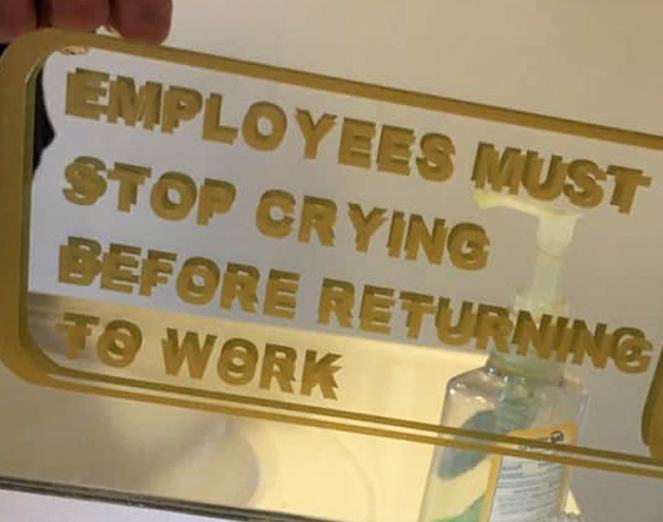


I‘d love to live in a DEI regime par excellence