
The standard keyboard layout is designed to slow down typing
No it’s not. It’s designed to put commonly-used letters in between rarely-used letters. You are correct that this is because of typewriters getting mangled, but a typist can type just as fast on a QWERTY or AZERTY keyboard as on an alphabetical keyboard. It stops typewriters from getting mangled by making it less likely that any given pair of adjacent keys will be pressed in succession.
And why is there empty space around the cursor keys, so you have to use WASD as a workaround in games?
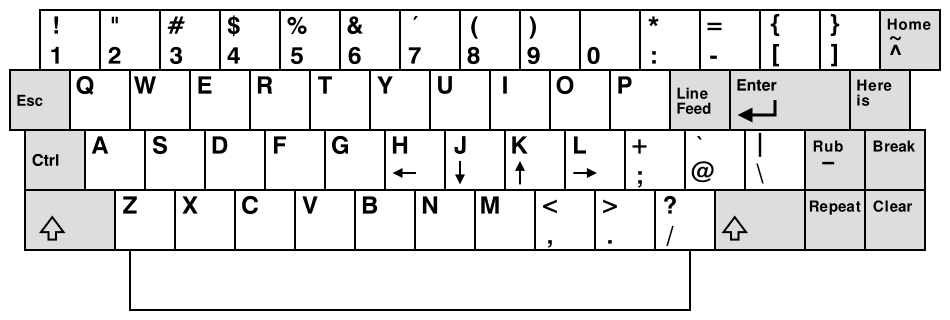
To facilitate touch typing. Since the cursor keys are physically separated from the typing keys, you are very unlikely to press a cursor key when you meant to press a letter, or vice versa. In the 1970s, keyboards used to have the cursor keys on the H, J, K, and L keys, which explains a lot about vi. In the 1980s, IBM introduced the inverted T layout, which made it easier to move the cursor around and to move about in games. This layout meant you didn’t need separate editing and input modes; you could move the cursor and type letters all in one mode.
Up until the early 2000s, games were designed with the intention that the player would use the cursor keys to move about. The use of WASD began as Denis “Thresh” Frong’s custom Quake layout, which allowed him to move and look independently. As this layout proved effective, other players adopted it, and then game devs designed their games around it.

Short answer: Yes.
Long answer: TERF is an acronym for Trans-Excluding Radical Feminist. They are indeed feminists; they believe that women should not be inferior to men. They also incorrectly believe that transwomen are actually men because they have penises, and therefore do not accept them as part of the feminist movement.
One thing that is often forgotten¹ is that just because you are part of an oppressed minority, or on the receiving end of bigotry, doesn’t mean you can’t be a bigot yourself. TERFs genuinely believe in tearing down the patriarchy, but they are fundamentally transphobic.
On a related note, Susan B. Anthony and Elizabeth Cady Stanton were two of the most prominent and influential feminists in 19th-century America. They campaigned tirelessly for women to be treated the same as men… of the same race. They believed that white women should be the equals of white men, and that black women should be the equals of black men, but that black women and men should be inferior to white women and men. And they actively opposed black people of any gender being allowed to vote. They were genuine feminists and also giant racists.
Or for a modern example, look at Israel. Jews may well be the most oppressed people in history, but that doesn’t stop Jews in Israel from being incredibly racist towards Arabs in general and Palestinians in particular…
Or look at us Irish. Anti-Irish racism was common up until the 1980s, and did we learn empathy? Did we fuck. The way we talk about Travellers and Poles today is much the same as the way the British talked about the Irish in the 1970s. Heck, I just did it there when I referred to Travellers as being distinct from the Irish, even though they are obviously Irish.
Similarly, the Fediverse in general and Mastodon in particular was largely built by trans people but keeps driving away black people, because a lot of white trans people are also pretty damn racist.
To summarise: Those who fight for social justice and still be bigots.
¹definitely related to the perfect victim fallacy