

22·
8 hours agoIt’s a long read, but it’s a damn good one.
It’s a long read, but it’s a damn good one.

$20 decillion isn’t just more money than exists. The amount of money that exists is a rounding error of a rounding error of a dozen more nested rounding errors compared to $20 decillion. The nominal GDP in 2022 was $100 trillion (and even then, calling this “all the money that exists” is a wonky metric). For comparison, $2 undecillion is only 100x more than $20 decillion. So while looking at this XKCD, just chop off two zeroes from the $2 undecillion figure, and boom.
Iowa gets 6 electoral votes, same as Nevada, for those curious.
Edit: addendum: “wtf”

Incidentally, we try not to use these sorts of “Forbes contributor” articles on Wikipedia when possible. They’re effectively just blogs masquerading under the credibility of Forbes staff’s actual journalism.
That said, I don’t see anything wrong with this excerpt. This is legitimate attack vector.

That’s kind of what I was thinking in my other comment. In this man’s version of events, there’s no chance he had a security detail because they wouldn’t let him do this stupid shit, but then if he didn’t, he took one of the worst courses of action possible. But it’s so unlikely that he didn’t have Secret Service on him at the time that yeah, I’m led to conclude like you did that he’s just lying his ass off to try to sound heroic.

They’re our Reform UK, our Rassemblent National, our Fratelli d’Italia, our Fidesz – arguably our AfD at this point.
Answer: no.
The two criteria I suggested were “not saturated with ads and AI trash” (technically just the latter would satisfy OP’s problem), and DDG meets both of those with no problem. Its AI “assistant” and its ads can both be trivially disabled. I use DuckDuckGo because I love its frontend and because it gives me fewer problems than Google did. I’ve only ever used alternative search engines that piggyback off the major ones (as you listed: DDG, Startpage, and SearX), so someone else would have to answer that for you.
Yeah, and it strikes me as a string of dumb decisions. Like obviously yeah, he was right to get himself and his kids off the mini-golf course. You really don’t know with this kind of thing if it’s coordinated, but after that… I think Vance should get Secret Service under 18 U.S.C. 3056(a)(7), so maybe I was wrong and he was escorted? But then it’s weird as hell that he would’ve been standing at his door like a “sentry” when the Secret Service would probably want him as far away from entryways as possible. And I still think it’s weird to go to his house instead of chilling at the police station for maybe an hour or so while they figure out what the fuck happened.
I also move unescorted and unarmed (possibly with my kids in tow??) to the one place in the world a would-be assassin would most expect me to be when I’m genuinely afraid for my life instead of just, I dunno, a fucking police station or something.
Using a search engine that isn’t saturated with ads and AI trash also solves this problem.
Oh shit, I think you’re right.
So one single poll suggests this when every other poll seems to suggest otherwise (even then, 1% is well within the single poll’s own +/- 2.1% margin of error), and the news outlet reporting this is the zero-standards rag Newsweek. Thank you, FrogPrincess, very cool.
Stein has the potential to give Michigan to Trump, and we should be worried about that.
But they brag about five (5) whole Green Party members getting elected to state legislatures since 1985. You know, that’s like one (1) whole member every eight (8) years, which is a lot considering there are only thousands of state legislature positions across the US (some of which have such little competition fucking Buck Cluck could probably get elected to a few dozen of them). So I think your point is moot tbh.
At press time, Stein remarked: “No, no seriously guys, we’re actually a serious party that has any business running for the highest office in the nation please believe me.”
I was talking about intentional spoiler candidate for Trump whom Republicans are scrambling to get on as many ballots as possible Jill Stein, but maybe we’re talking about the same person here.
Breaking news: people with an actual commitment to environmentalism recognize Jill Stein for the obvious Russian shill and extreme threat to environmentalism she is. More at 11.
Yeah, but injections look much more precise and clinical rather than like brutally murdering someone, so they keep up an appearance of humaneness to the public. So it’s clearly still the preferable choice.
I’m just so surprised that in addition to not deterring crime at all (and possibly making it marginally worse), not being humane whatsoever, and being far, far more expensive, it’s also completely wrong all the time.
Anyone who still supports the death penalty state-sanctioned murder at this point is either grossly mis-/underinformed or is a “but it’s fine as long as we make really, really sure they did it!” person (not realizing there’s a decades-long appeal process or that administrations who use it don’t actually give a shit about the certainty of a conviction). That, or revenge just makes their pp hard and they genuinely don’t care about the fact it’s categorically worse in every way.
“Ban books having anything to do with sex from public libraries so that children are less likely to realize and communicate they’ve been sexually abused by the church. It’s foolproof.” –the GOP probably









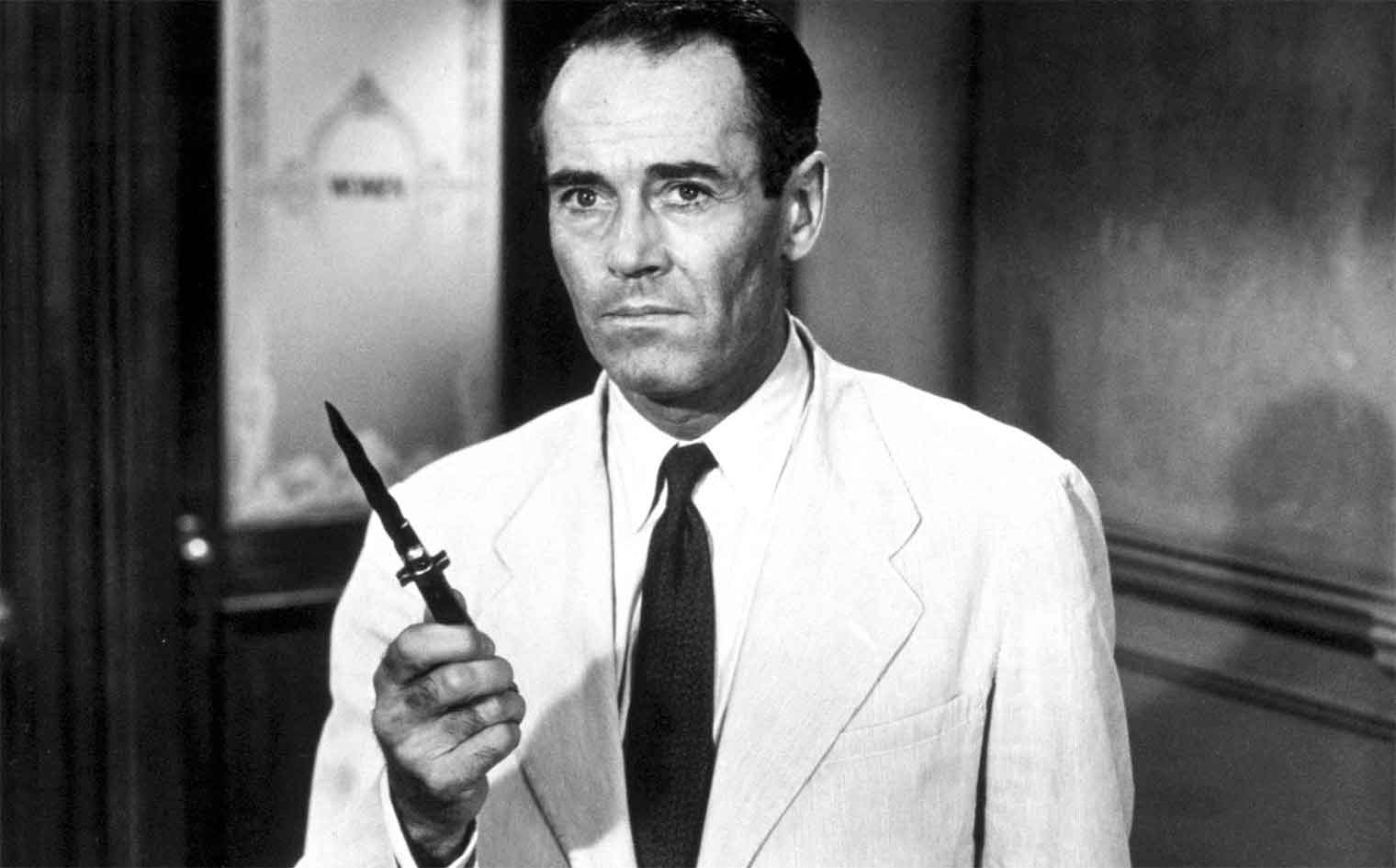



I just want to go off-script for a second and say that I’m so fucking happy this meme format has stood the test of time.