- cross-posted to:
- science_memes@mander.xyz
- cross-posted to:
- science_memes@mander.xyz
You must log in or # to comment.
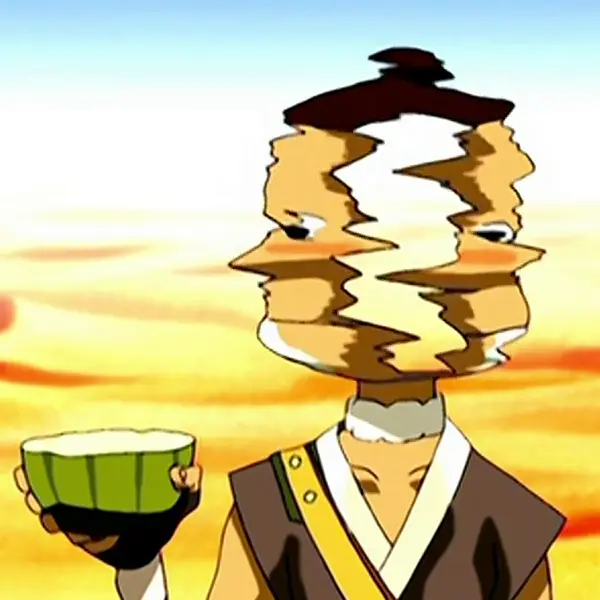
Because they are only purple on the inside. Do you think apples are white? Or bananas?


Humans are red so why not?
Speak for yourself. I’m more mayonnaise colored
Yeah, but you cannot convince me that watermellons are not red.
That’s a different variety than my local grocers. Stores near me, the papery outside it brown the red flesh you see there is dark purple for us.
in hungarian it’s purple onion, you just choose the wrong language :)
At least we aren’t hungary all the time

also, take my upvote
in portuguese too
So, this is kinda weird, but general colors didn’t have names for a long time. Like in Greek texts by Homer he describes the water color as dark wine color because the name “blue” wasn’t a word. So it’s possible when they named a “red onion” purple wasn’t a color and considered a shade of red.
Also as others have said purple was the color of royalty and they didn’t want an association.
It’s kind of wild when you learn that words for blue are relatively new in human language.
In Japanese it’s the reverse; ‘blue’ is used for blue and green; designating green as the different color is relatively recent for them
Huh, so Kentucky isn’t the only place with bluegrass
I started thinking that it kind of makes sense as blue is not a common naturally occurring color and then I remembered the sky.
Yeah, that’s the part I have trouble with. Leaves are green, the sky is blue. They are very different colours. It’s not ambiguous like whether teal or turquoise is green or blue (I could easily see either of those being labelled as either blue or green), or different shades of the same colour like fuscia or maroon. They are different primary colours of light.
It’s just weird to me that two very common every day colours that don’t look anything alike wouldn’t get distinct names. I understand that the blue photoreceptors we have are the newest ones and are less sensitive than the red and green ones, but I wouldn’t have figured that our evolution of it to the point where we see what we currently see (if you aren’t colour blind) would have been that recent. I expected hundreds of thousands of years, not tens of thousands or just thousands, which is what it would need to be to explain cultures that didn’t differentiate between the two until recently.
A lot of old writing refers to the sky and the sea as green.
What color did they say the grass was?
Also green.
That’s funky
There are blue flowers
You mean those green flowers?
-ancient Greek guy (probably)
Cant have pesants eating royal onion now can we?
Because the dry outer skin is a rich red colour
… No? It’s still typically a shade of purple…
There’s a joke in Bulgarian somewhat related to that. What’s commonly referred to as a prune plum we call something that roughly translates to “blue plum”. The joke goes something like this:
– Dad, what’s this?
– It’s a blue plum.
– Why is it red?
– Because it’s green.
Language is weird, but it’s ironic that our use of it makes it so.
It wanted to be associated with the proletariat not the ruling class.
What really gets me is that the compounds responsible for this hue in food are called “anthocyanins” which means “blue flower.” I can’t even.
McCarthyism
What does that make yellow onions?
I could tell you, but then I would sound racist
If you hold a yellow onion and a white onion side by side, it’s actually yellow(ish)
Jess and Rob on Words Unraveled talk about color word origins, and their discussion is illuminating about the cultural variance in perception of color. Now I am at peace with all the seemingly weird color names for things.
For a quicker tour, Vox talks about the order that languages fill in color words as cultures begin to refine their distinction.
I’ve always hated the “blue, indigo, violet” end of the English words for the rainbow. I only recently found out that the 7 colours of the rainbow in English is especially BS.
At the beginning of Newton’s time, there were thought to be 5 colours in the rainbow: red, yellow, green, blue and violet. Newton added Orange and Indigo because he thought (for spiritual reasons) there should be 7 colours. There were 7 days of the week, 7 planets (known at that time), 7 notes in the (western) musical scale, etc.
But, Newton’s blue isn’t our blue today. For newton, the colour “blue” is what we currently call “cyan”, so the 7 colours of the rainbow were really red, orange, yellow, green, cyan (blue), blue (indigo) and violet. That makes a lot more sense.
But, there really could be arbitrarily many colours in the rainbow. We could have “rust” as a colour, in between red and orange, or “gold” in between orange and yellow. We could even have a spectrum that didn’t include “green” but included “lime” which is between today’s yellow and green, and cyan on the other side, and no “green” at all.
The skin of red onions is reddish to purple. The flesh is purple much like shallots. But the skin sets them apart.
I’m crying
The inside is purple, but the outside is red, especially if it’s dry.
Same reason they call the tree a “Redbud tree.”
Barely literate settlers were colonizing and writing home about the beautiful
PuplePrulePurlpleLavendaarRed-Bud Trees.Wait till they find out that some cultures didn’t have separate words for green and blue
Calm down… calm down… Perhaps consider putting the onions aside and trying a nice parsnip.